

Hardware shipments, model prices and AI-assisted work each require different evidence before they can support a buying decision.
Media
A library of the work behind TechBridge: the magazine, articles, posts and videos. It looks at what has actually changed in AI and in how professional-services firms buy technology, with the sources kept beside the claims.
Media
Hardware shipments, model prices and AI-assisted work each require different evidence before they can support a buying decision.
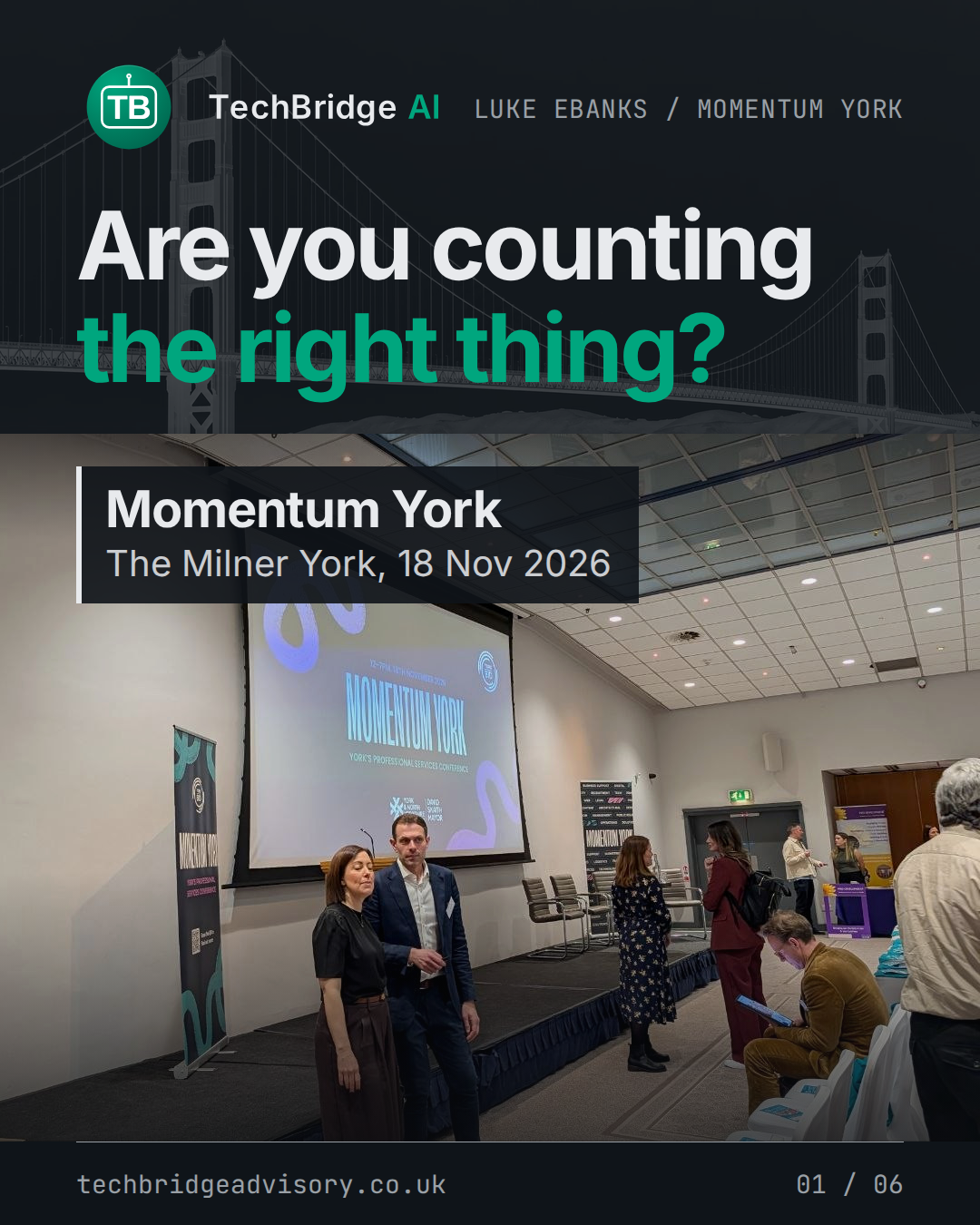
Luke shares four lessons from Momentum York, grouped as ask, count, pace and see. He argues that the value of AI comes from the people using it and from counting the whole impact of a decision, not just the price on the page.
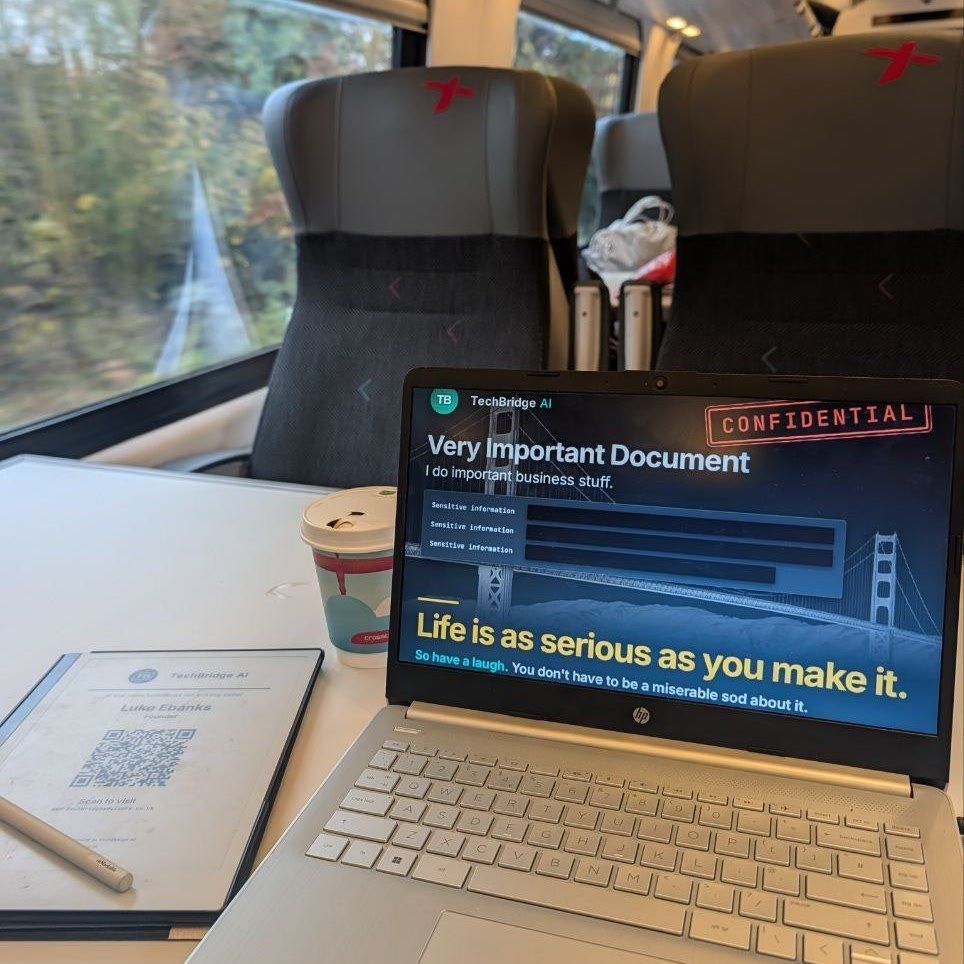
Luke heads to Momentum York, a professional services conference, to meet people and hear what is moving in the market. He argues that a room of people doing the work teaches you more about the market than any report.

Luke uses a supply-chain compromise of a widely used website tool to show how risk can reach a law firm through a supplier. He argues that firms without a security specialist end up buying on trust, and shares the questions buyers should ask suppliers before they sign.
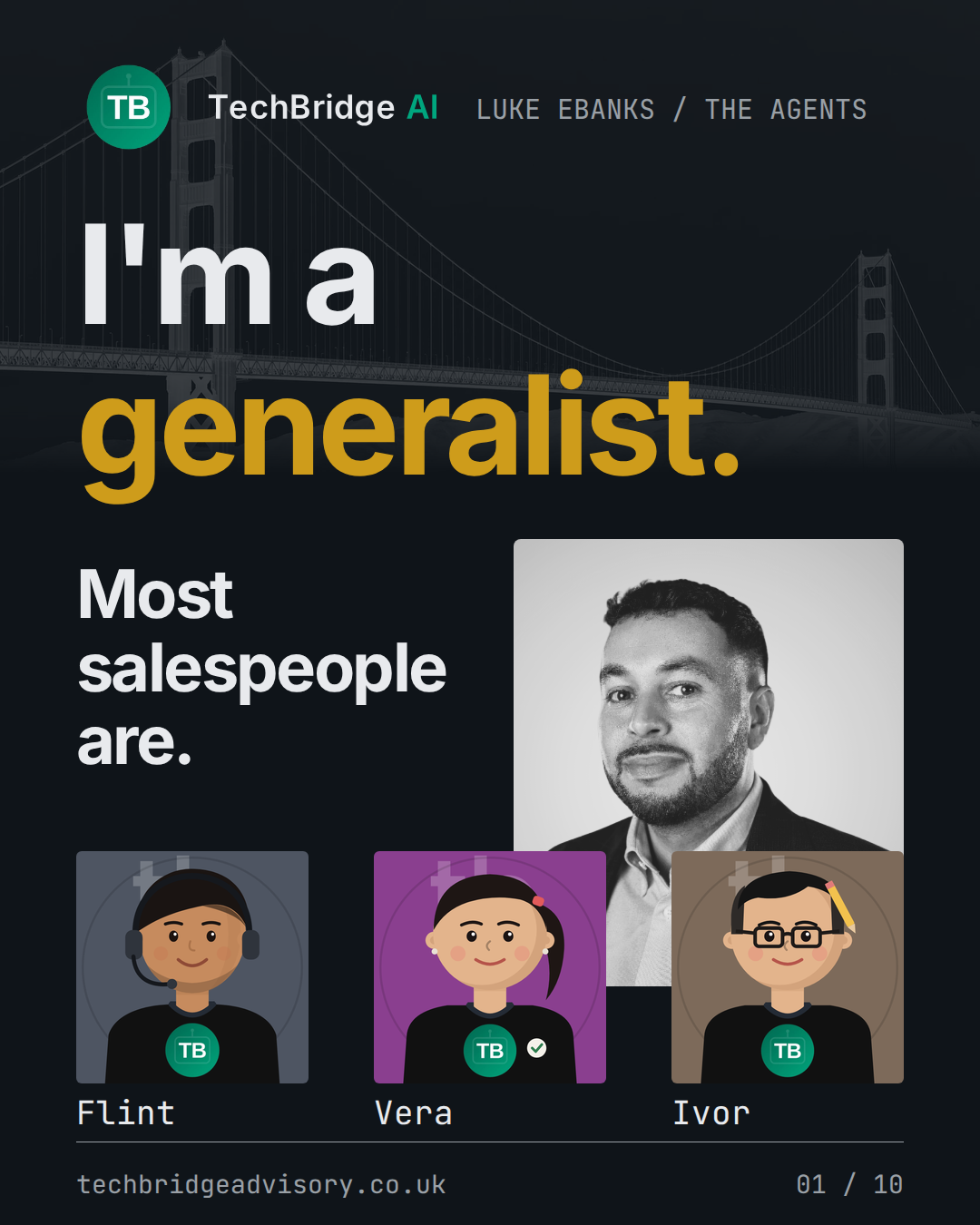
Luke explains why each agent on his team starts with a gap he can name. The same questions apply to sales teams: where is the work getting stuck, and who should own it?
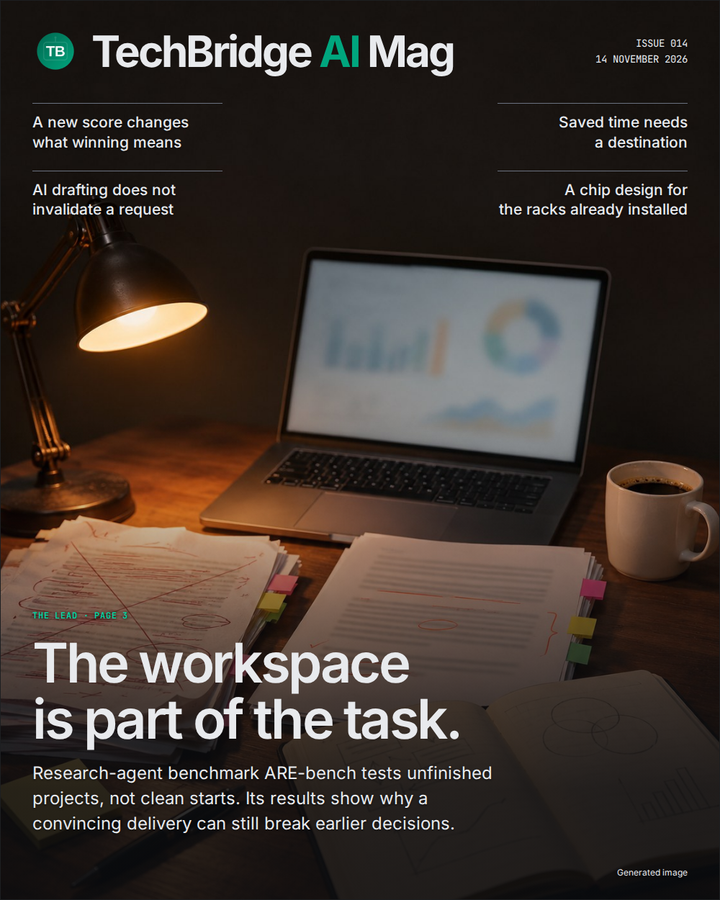
Research agents meet unfinished projects. Model scores, workforce surveys and infrastructure promises need equally careful definitions of success.
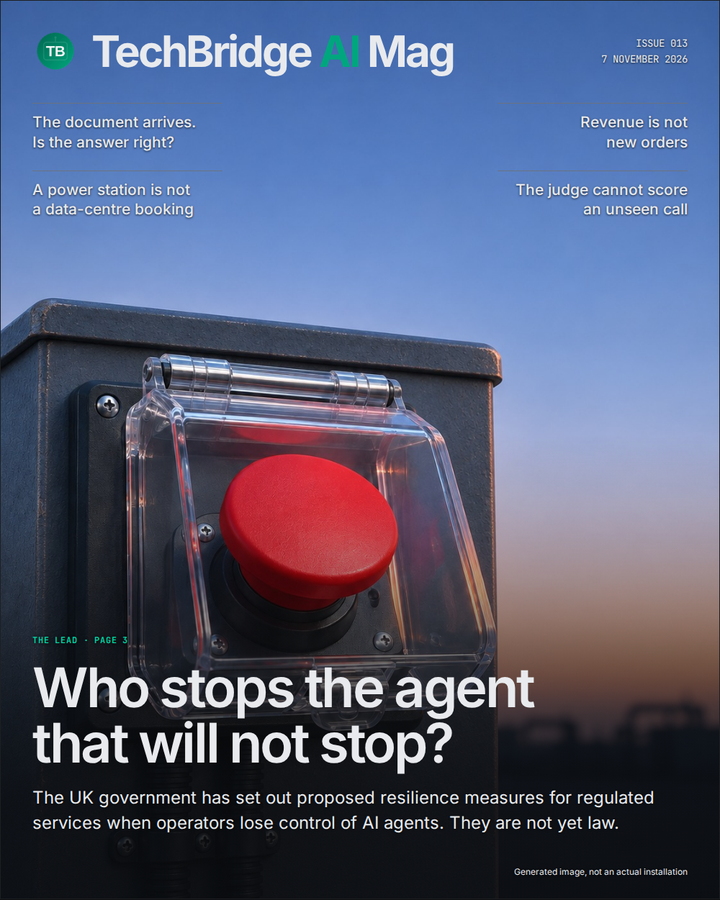
AI products, work, security and infrastructure, 31 October to 6 November 2026.

AI infrastructure, cloud choice, cyber resilience and work, 24 to 30 October 2026.

AI infrastructure, safety, security and work, 17 to 23 October 2026.
AI safety, work, regulation and infrastructure, 10 to 16 October 2026.
AI regulation, models and infrastructure, 3 to 9 October 2026.
Where instructions end: an AI agent tested by the UK AI Security Institute, the research loop and what sits behind an agent.
Beyond the announcement: the rate card, the laboratory and the people doing the work.
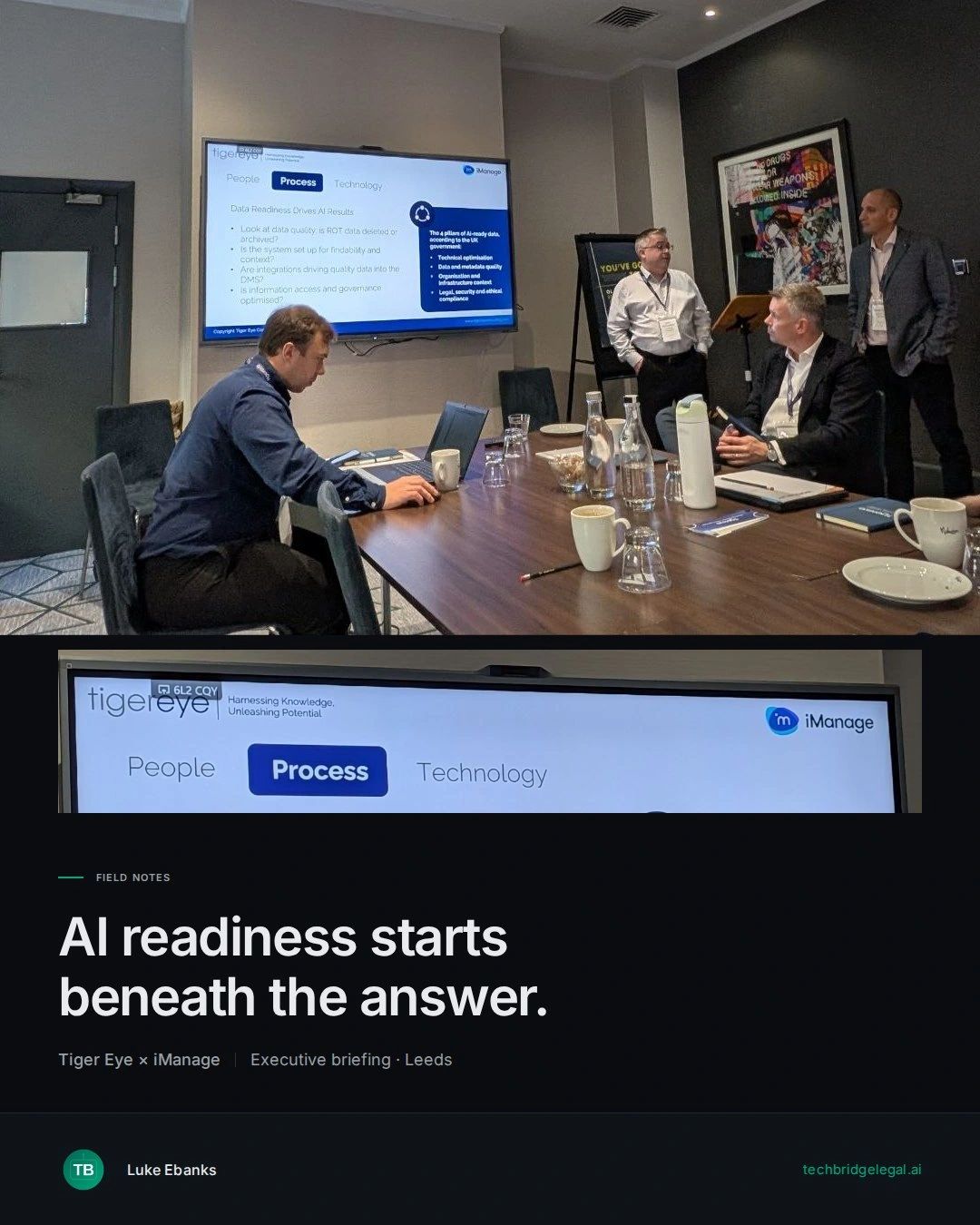
Luke shares three takeaways from a Tiger Eye and iManage executive briefing in Leeds on governance, context and data readiness. He argues that when evaluating legal AI, firms should understand the knowledge and controls beneath the answer, not just the answer itself.
A faster draft. More work for someone else? Research, specialist perspectives and a practical exercise.
Luke argues that firms should start by finding where the work is stuck rather than by choosing an AI tool. He suggests understanding the process and bottleneck first, then deciding whether AI, conventional automation or a change in working practice is the answer.
Luke draws on the Legal Services Board's response to the SRA to separate evidence that work was done from evidence that it worked. He argues that leadership teams should report both for their own improvement actions, so a status cannot improve before the protection does.
Luke uses two European technology infrastructure announcements to show that local hosting does not mean a self-contained supply chain. He suggests firms ask AI suppliers to show what happens to one matter file from upload to exit, and test the export before committing.
Luke argues that delegating to an AI agent does not reduce workload if you still have to chase it for progress. He recommends defining what done means, what evidence should come back and when the agent must escalate before handing over the task.
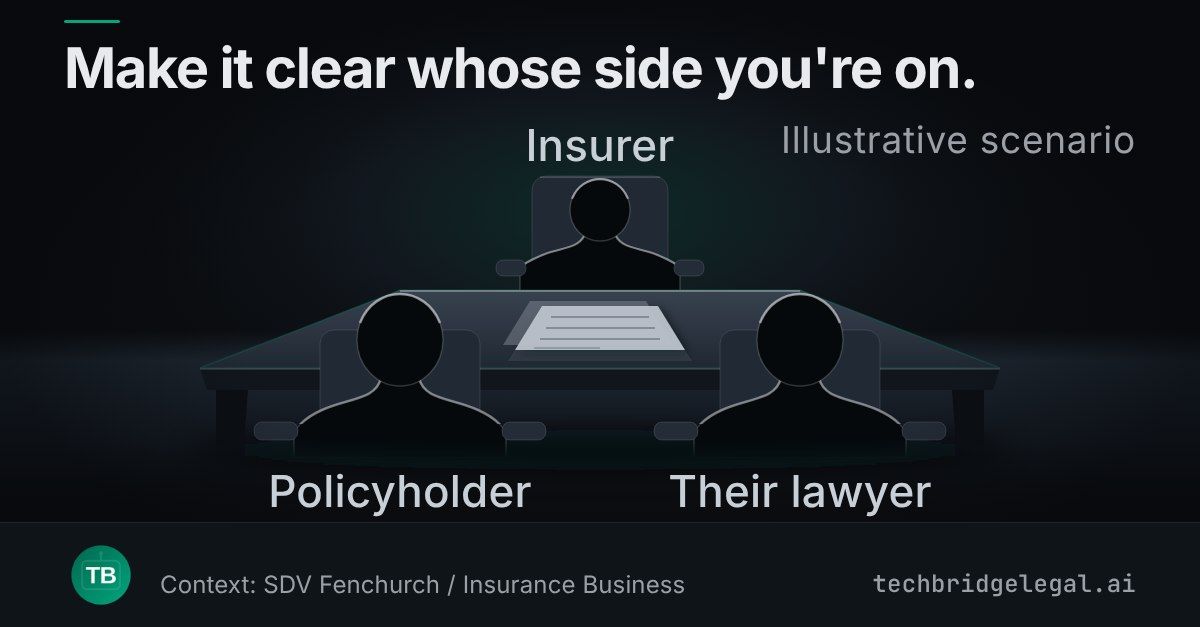
Luke uses a newly combined policyholder-only firm to show how stating whom you represent tells a client whether you are built around their problem. He is careful about what positioning proves, and argues that firms should make the reason for their model visible from the client's side.
Luke draws on international research into AI and early-career work while stating plainly that it does not prove a crisis in UK law firms. He suggests that removing junior tasks without replacing the learning they carried can create apprenticeship debt, and offers questions to test whether the pathway has been redesigned.
Luke separates supplier revenue growth in legal AI from evidence that buyers have improved how they work. He proposes three separate ledgers, supplier performance, product adoption and buyer outcomes, and lists the tests a firm should apply after signature.
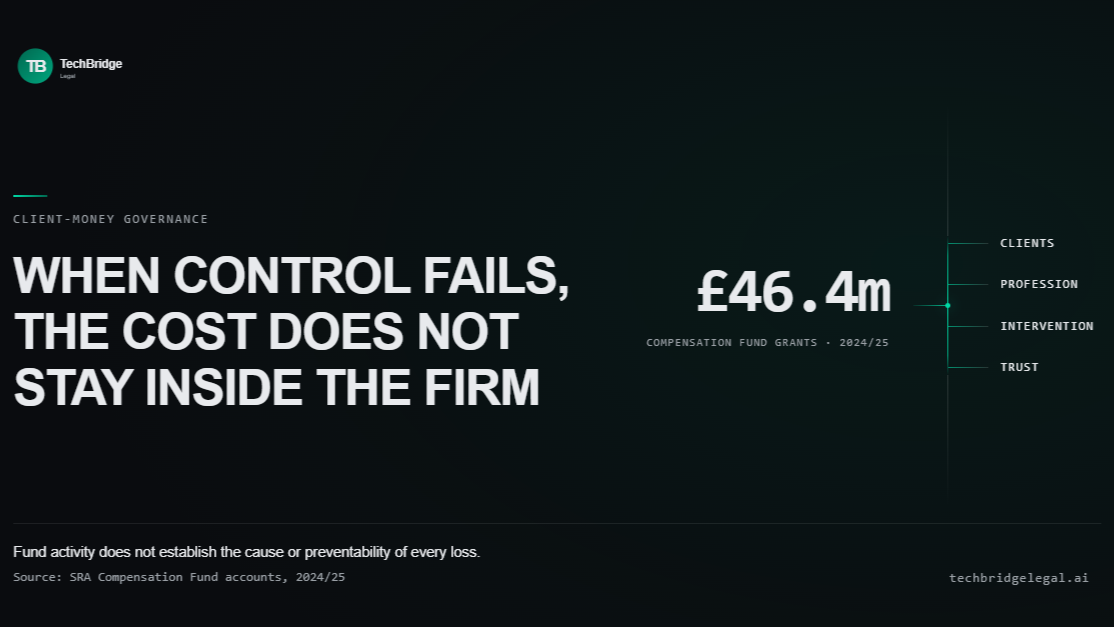
Luke uses the SRA Compensation Fund accounts to show that client-money failures impose costs on clients, other firms, regulators and trust in the market. He argues that reconciliation alone is not the whole control system, and sets out what boards should be able to prove about their client-money evidence chain.
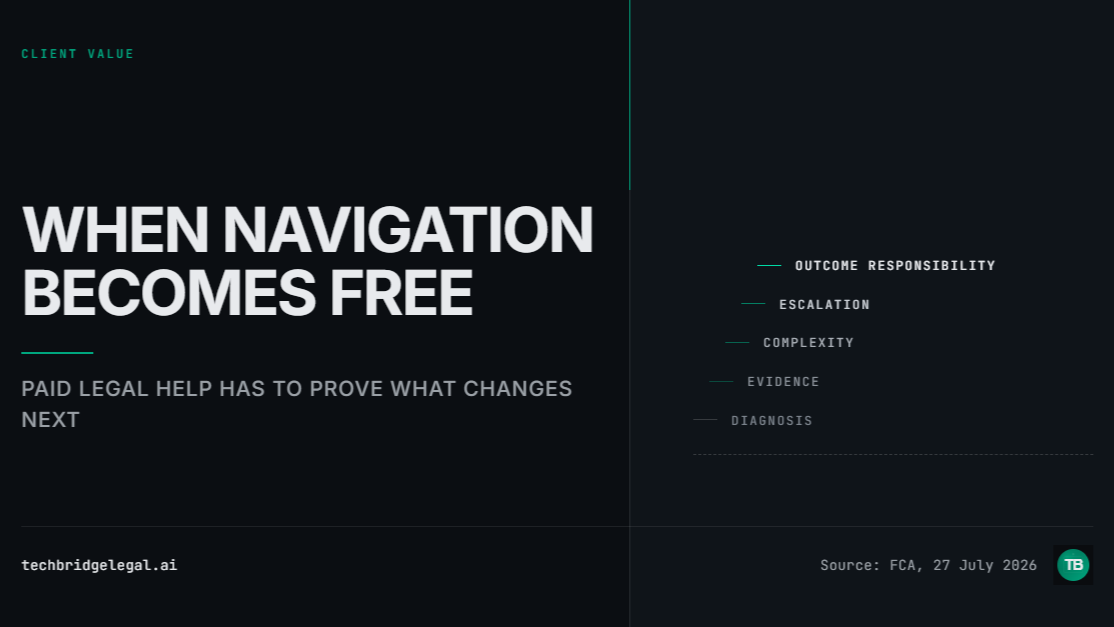
Luke looks at a regulator's campaign helping consumers complain directly with a free template, and what it means for paid legal help. He argues that when navigation is free, paid value has to move towards diagnosis, evidence, complexity, escalation and responsibility for the outcome.
Luke argues that legal AI cost now runs well beyond the licence, through usage, implementation, supervision and workflow change. He urges firms to decide who owns the bill as usage grows and how they will explain cost, control and client value.

Luke reflects on a LegaltechLive evening and the value of in-person, unstructured conversation. He argues that legal technology should remove friction and give the human part of the work more room, not automate people out of it.
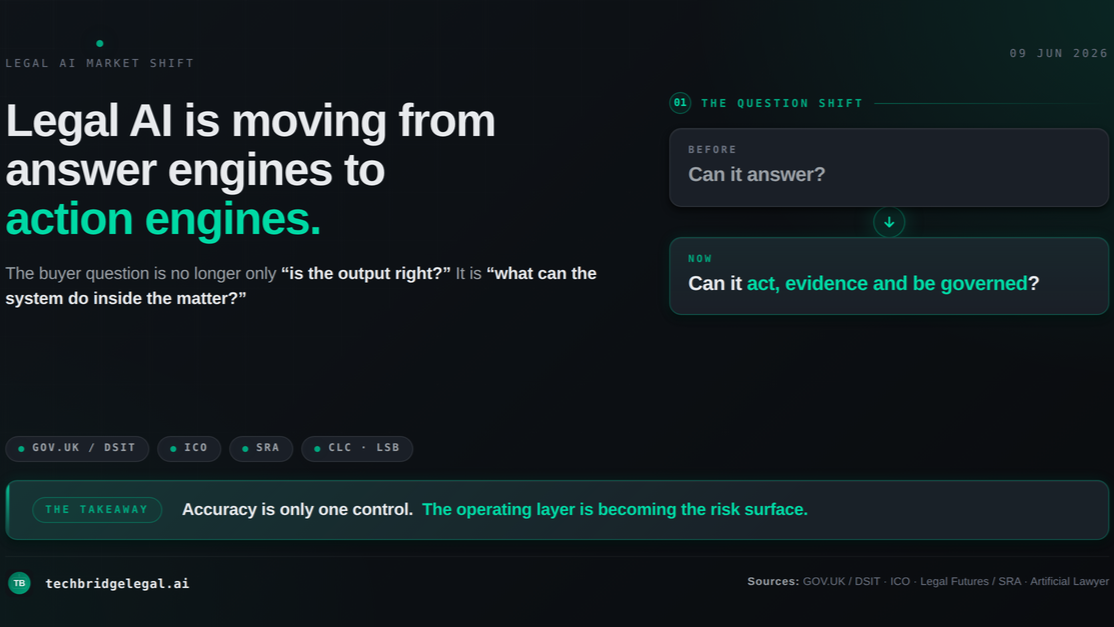
Luke argues that legal AI is moving from tools that answer to tools that act inside the matter, and that government and regulator activity makes this the moment to notice. He sets out six questions a firm should answer on paper before piloting such a tool: read, write, trigger, review, evidence and accountability.
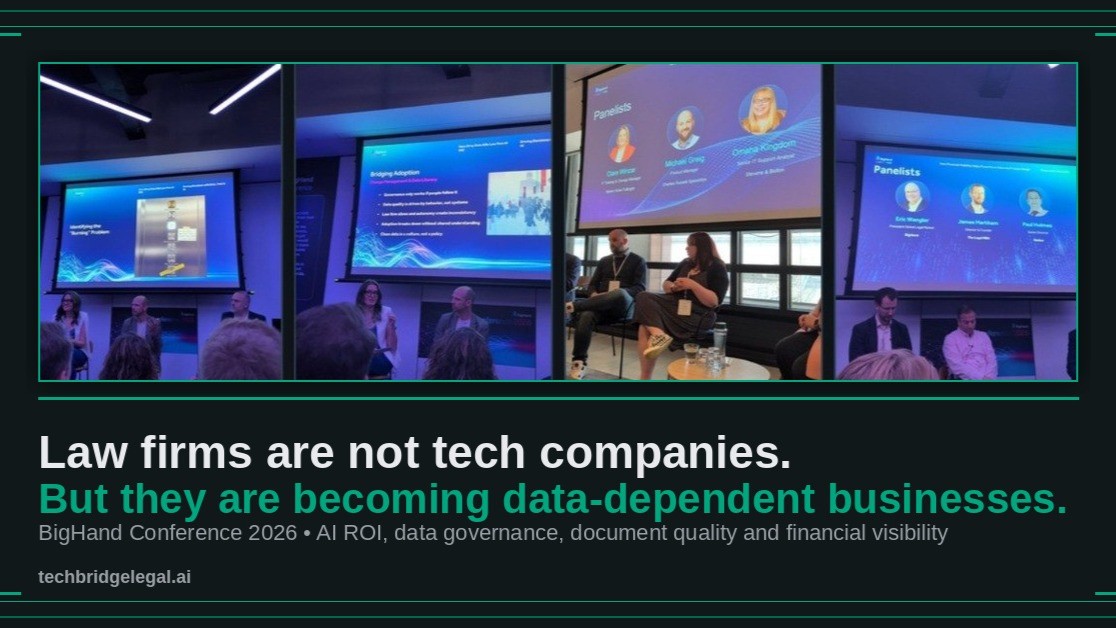
Luke reflects on a BigHand conference where speakers kept returning to the operating reality beneath AI. He argues that law firms need not become software companies, but they are becoming data-dependent businesses that must understand how they run before AI can help.
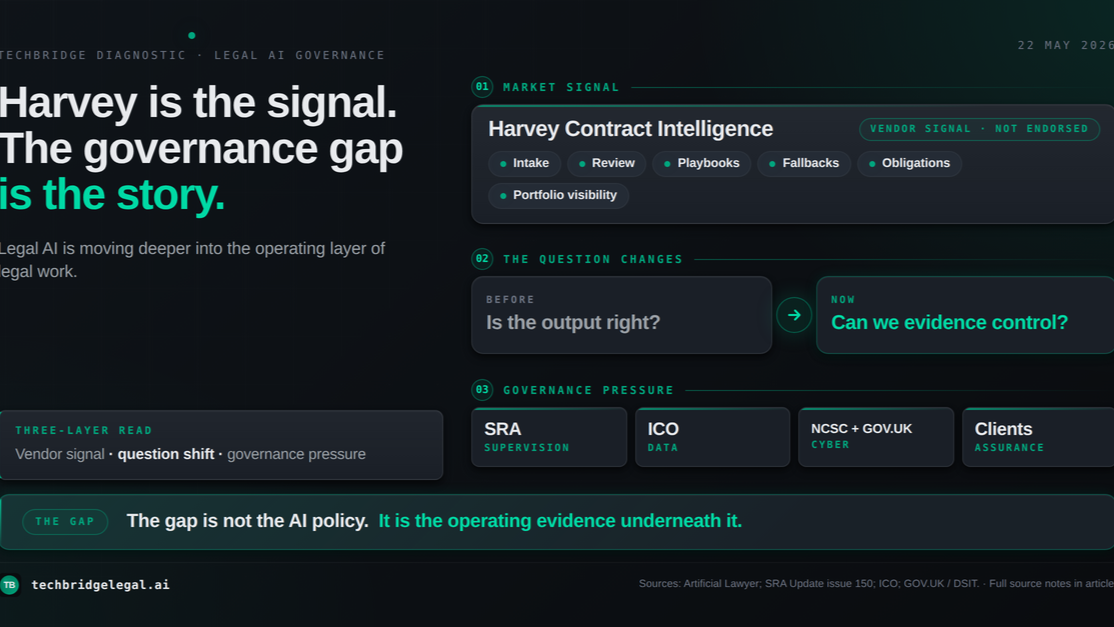
Luke uses Harvey's contract intelligence launch as a signal that legal AI is moving into the operating layer of legal work. He argues that once AI shapes workflow, firms must be able to evidence how that work was controlled, so governance has to become workflow-shaped too.
Luke observes that AI platforms are moving towards offering a choice of models rather than a single tool. He argues that law firms should stop asking which tool is fashionable and decide which work needs which model, workflow, data source and review process.

Luke responds to reporting on solicitors referred to the regulator over AI-generated authorities. He argues this is a supervision, verification and professional-conduct issue, and asks who owns the control environment when AI touches client work.
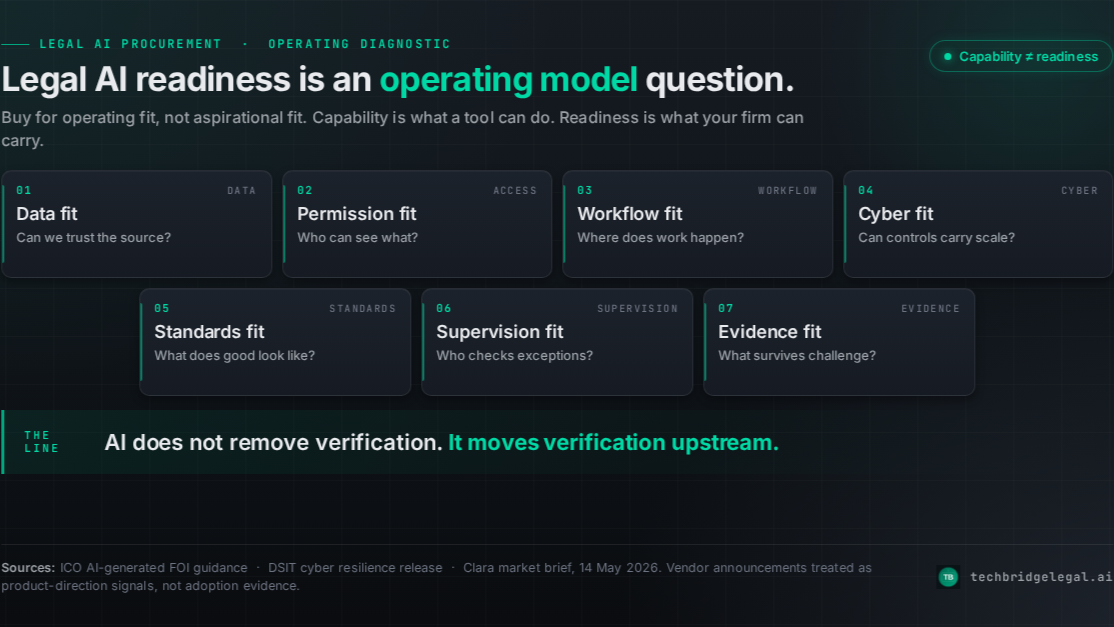
Luke argues that legal AI is still bought on capability and demos, when the real test is whether the firm can safely absorb the tool. He urges firms to buy for operating fit across data, permissions, cyber posture, standards, supervision and evidence, not for aspirational fit.
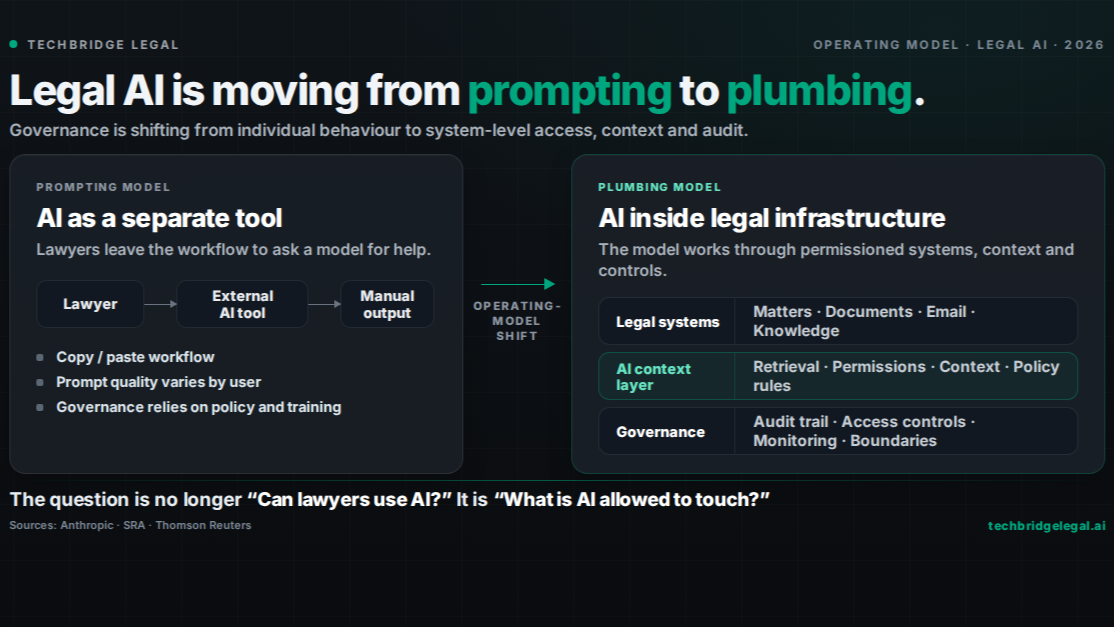
Luke argues that legal AI is moving from prompting, where lawyers visit a separate tool, to plumbing, where AI runs inside the systems work already flows through. He says this changes the governance question from whether lawyers can use AI to what AI is allowed to touch, with different owners and controls.
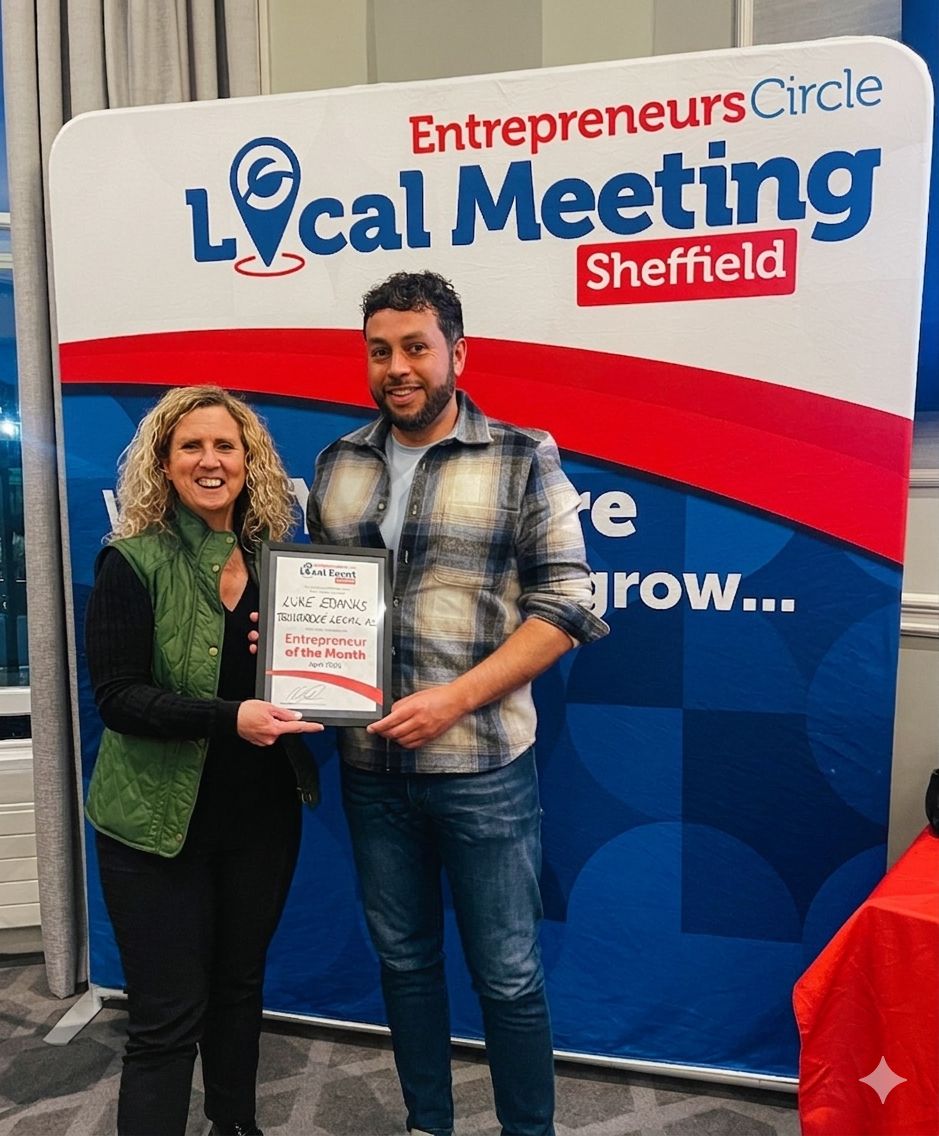
Luke reflects on being named Entrepreneur of the Month at an Entrepreneurs Circle local meeting in Sheffield. He describes entrepreneurship as the discipline of continuing to show up while the outcome is still uncertain.
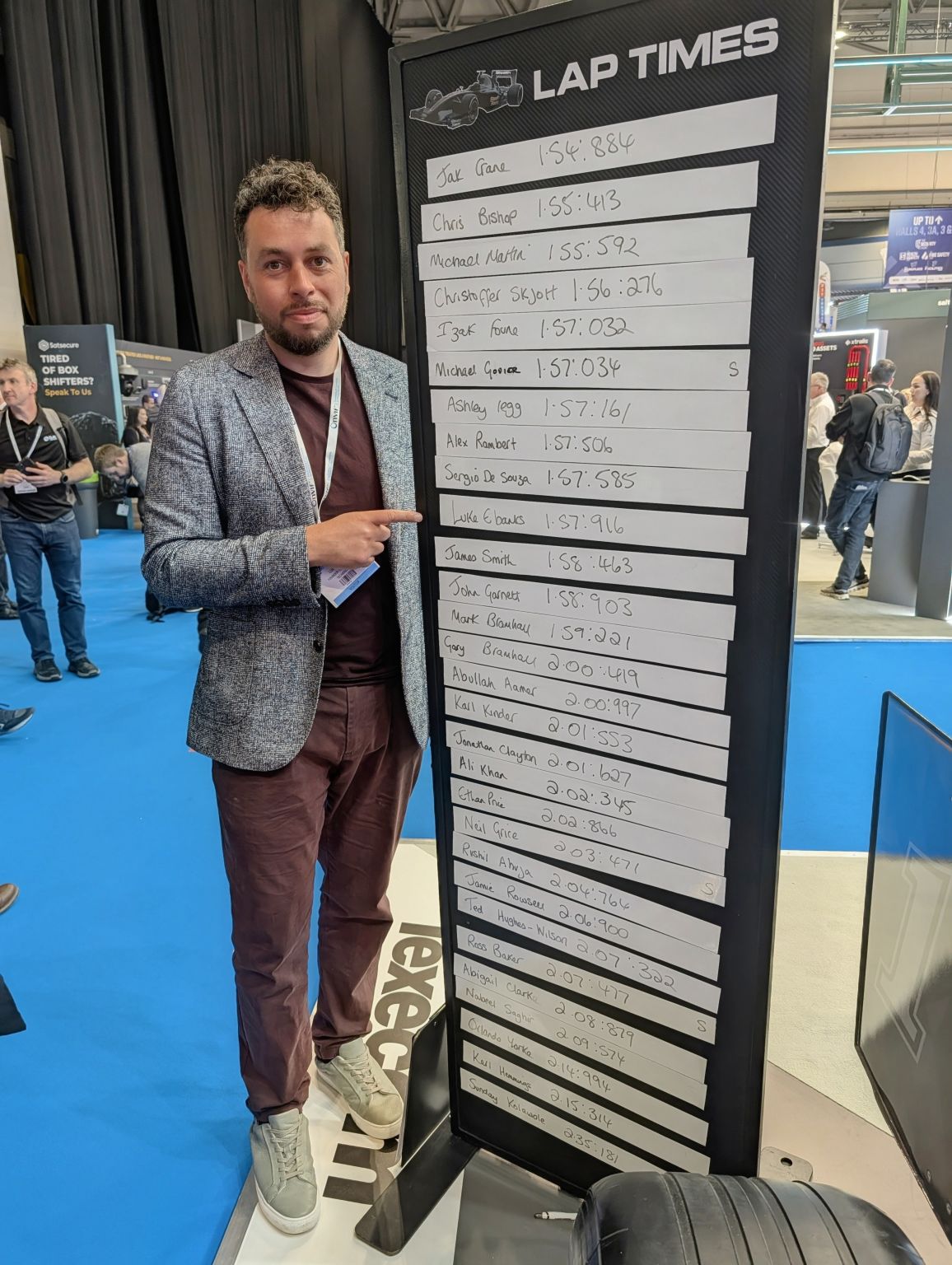
Luke reflects on two technology events and argues that their real value often sits in the conversations around the agenda. He connects this to legal technology, where transformation is still mostly a people problem that starts when someone asks whether it will work for them.
Luke uses Thomson Reuters' plan for its own legal model to argue that the advantage in legal AI is shifting from model access to proprietary data. He suggests firms ask vendors what legal data they own, how legal performance is proven and how the tool can be deployed, rather than which model they use.
Luke reflects on survey findings that law firms want to expand their use of AI but feel held back by limited expertise. He argues that the barrier is capability rather than budget or partner resistance: firms want to move but do not know where to start.
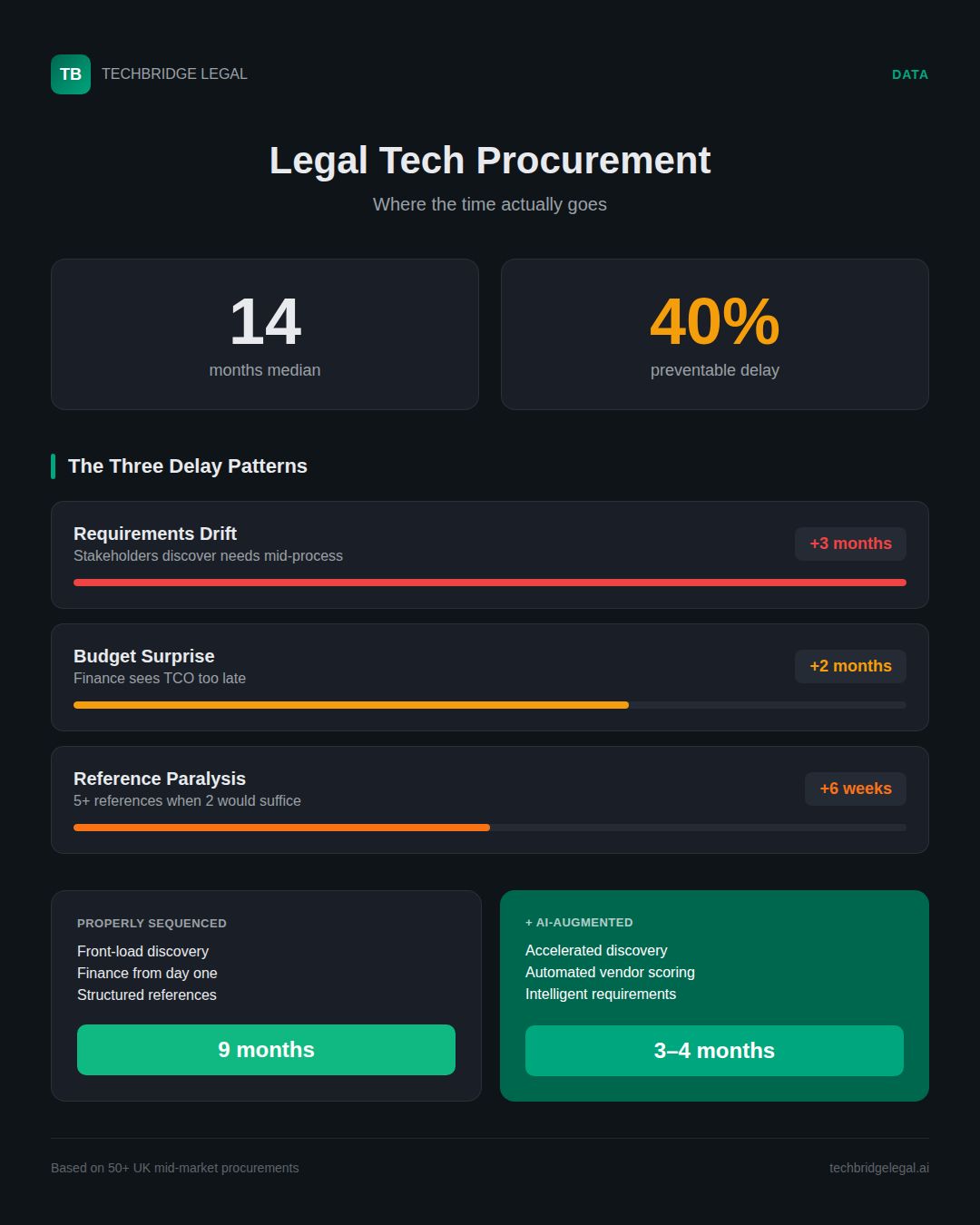
Luke looks at where time goes in legal technology procurement and names three recurring causes of delay: requirements drift, late budget surprises and over-long reference checks. He argues that the process is not inherently slow but poorly sequenced, and that early discovery and finance involvement shorten it.
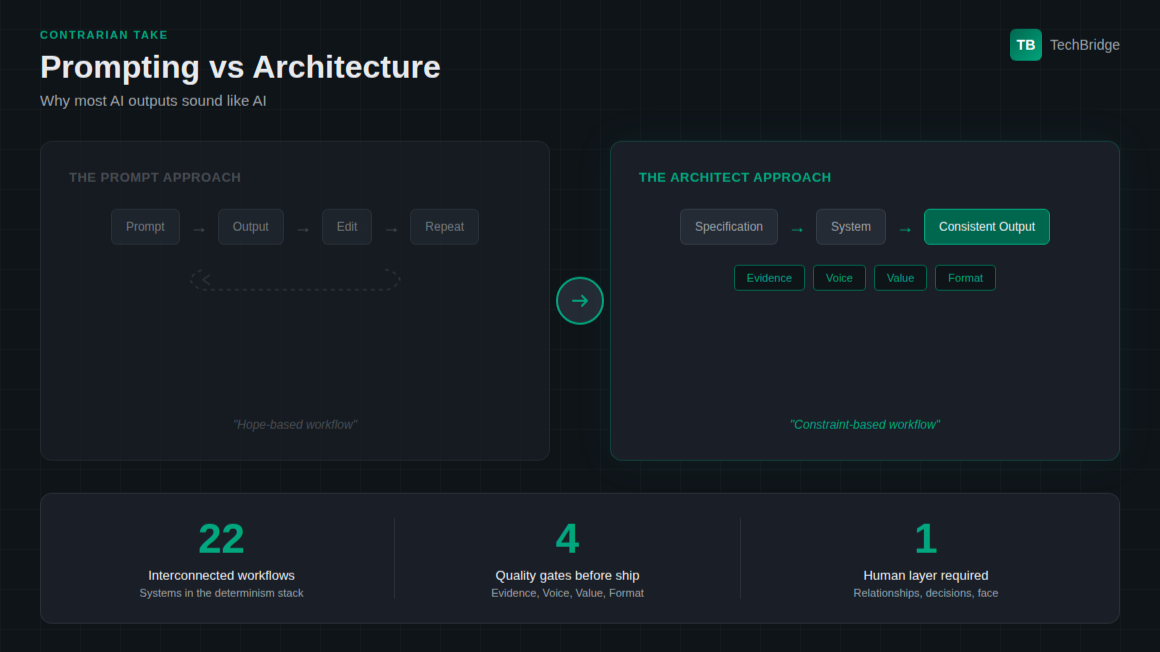
Luke explains why he spent months building the systems behind AI outputs rather than launching straight away. He argues that dependable AI work comes from architecture, specification and quality gates, not from better prompts alone.
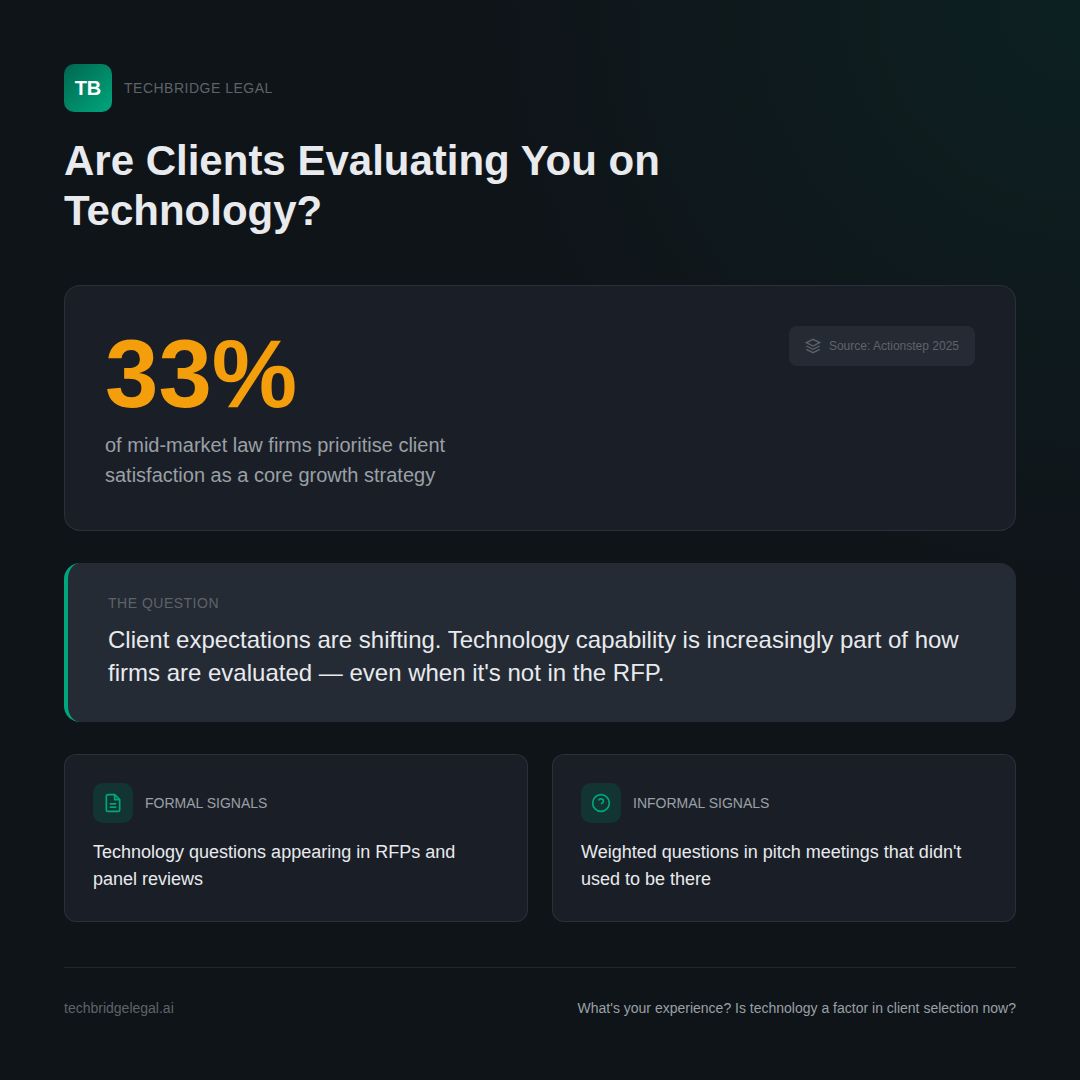
Luke observes that technology capability seems to be appearing in client pitches and RFPs where it did not before. He is open that this may be a pattern drawn from a handful of conversations, and asks whether others are seeing the same shift.
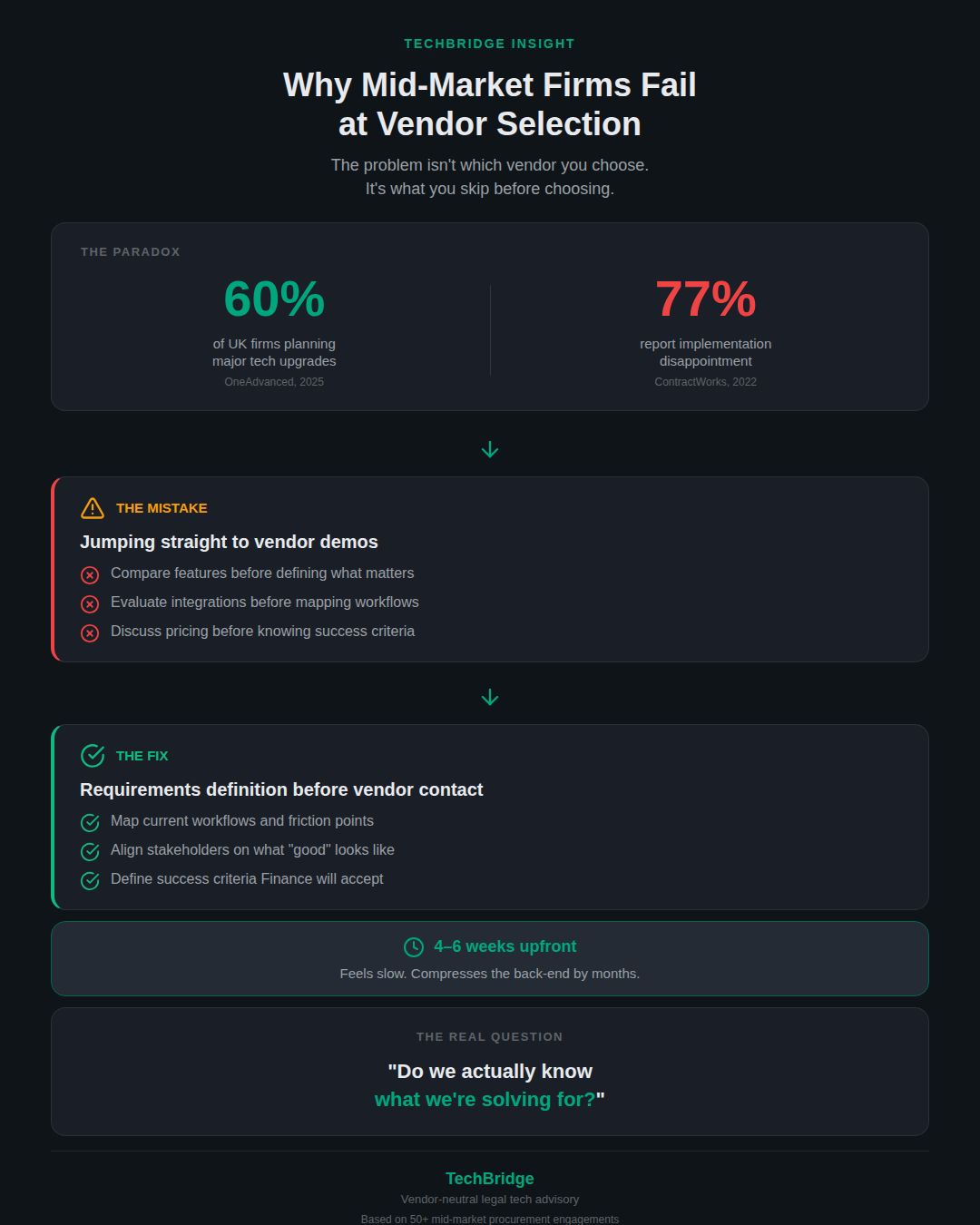
Luke argues that firms rarely go wrong at the point of choosing a vendor; they go wrong by skipping the work that should come before it. He recommends defining requirements, mapping workflows and agreeing success criteria before any demo, so selection becomes a confirmation rather than a guess.
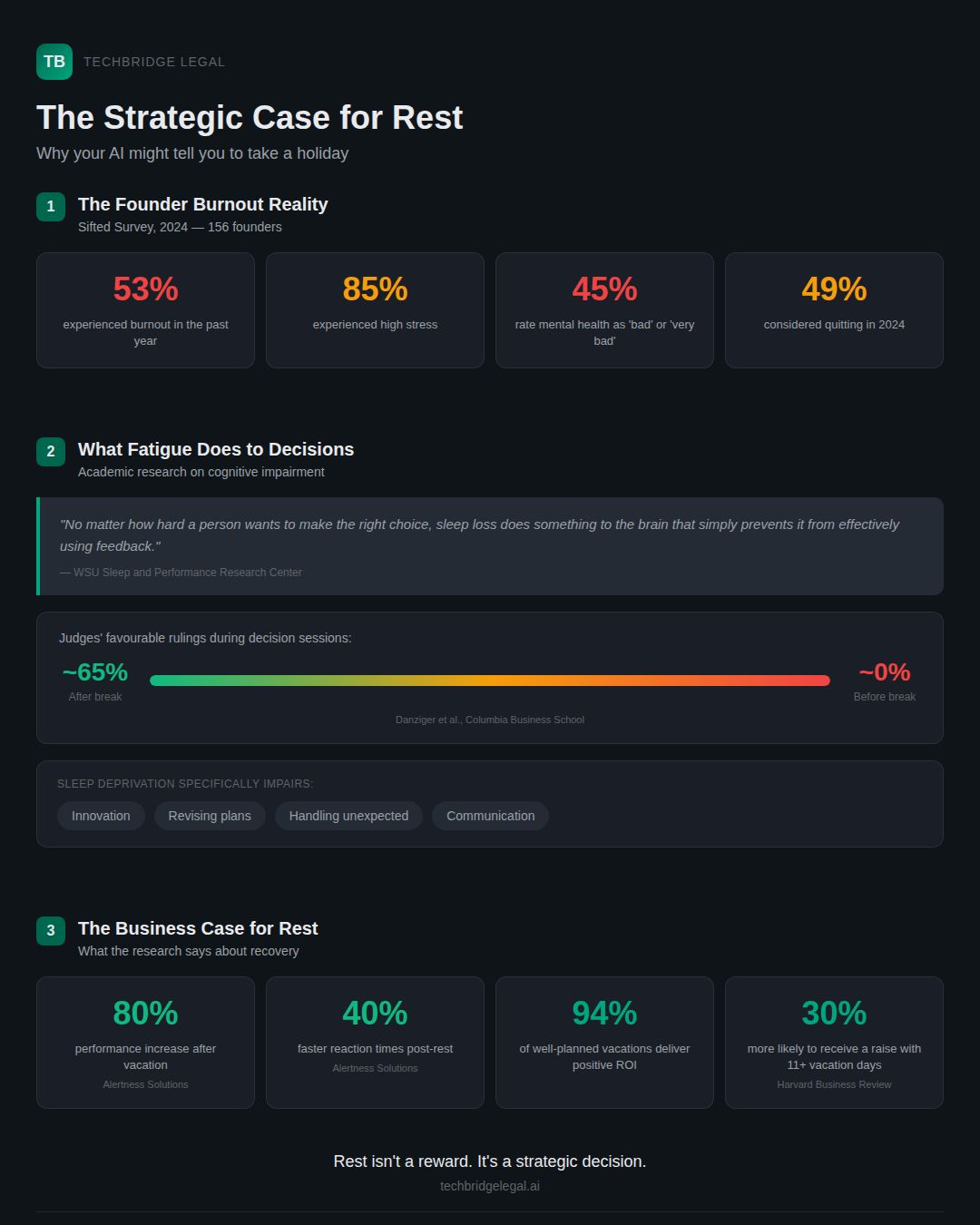
Luke describes giving an AI strategy agent the full picture of his business and his own state, then asking whether he should take a break. He argues that AI is most useful when it is given enough context to see what the person running the system cannot.
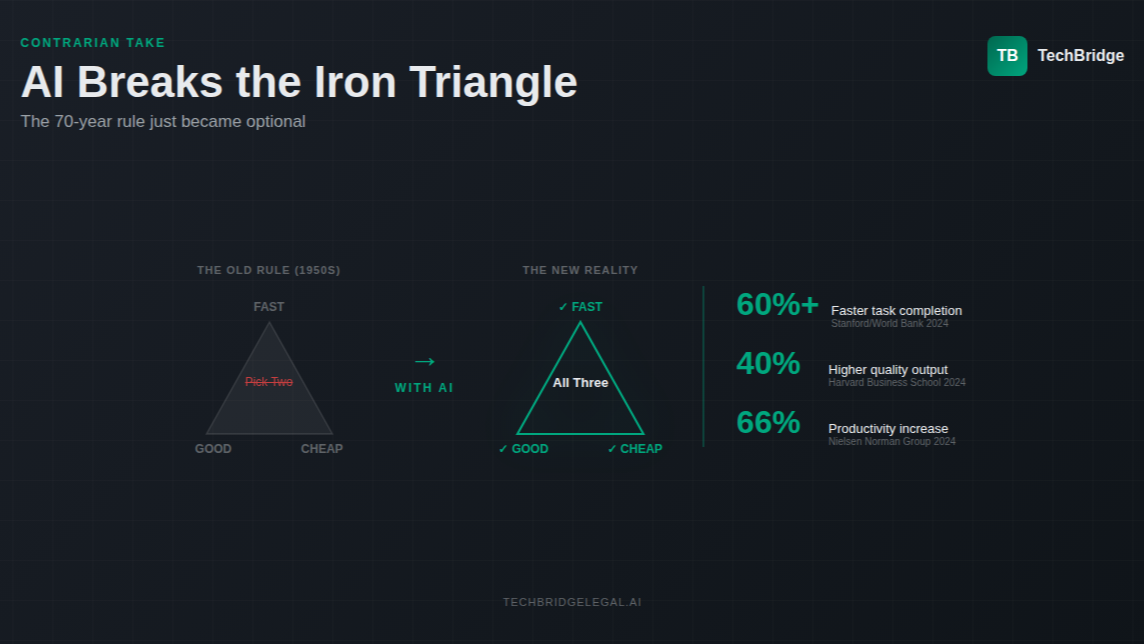
Luke tests the old rule that work can be fast, good or cheap but never all three, and asks whether AI has changed it. He argues that the constraint has moved rather than disappeared, so firms need to map which tasks genuinely benefit and which still carry the old trade-offs.
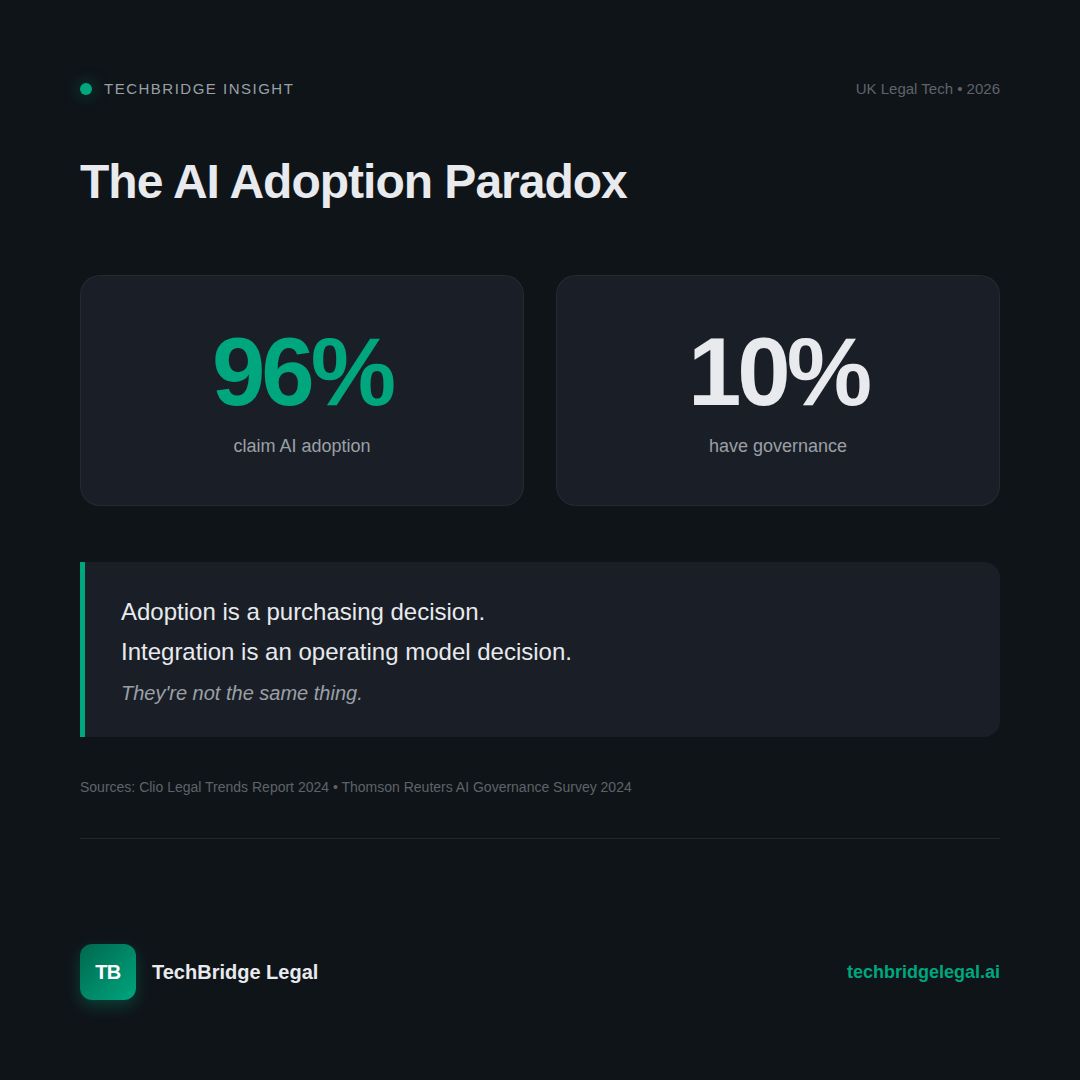
Luke argues that using AI tools is not the same as integrating them, and that many firms are experimenting without governance. He points to governance first, workflow mapping and early finance involvement as the low-cost steps that separate real integration from pilots.
Luke explains why he stepped back from selling to spend months talking to firm leaders, vendors and advisers and building AI systems. He argues that law firms are buying technology without a clear strategy, and sets out why he started an independent advisory practice.
Luke invites IT leaders to a live session he co-hosted with The SAM Club on Microsoft licensing for mid-sized firms. He argues that independent advice helps firms find overspend and compliance exposure before renewal or audit forces the issue.
Luke announces that he has started as founder and technology alignment consultant at TechBridge. The post marks the start of the business.

Luke reflects on a hotel spa receptionist who waved away the usual locker deposit with a simple word of trust. He argues that in a world run on policy and process, small human gestures carry more weight than they appear to.
Tell me what you are working on and what you want to test.